Interview
I’m not just designing a kit, I’m designing the world that kit belongs in
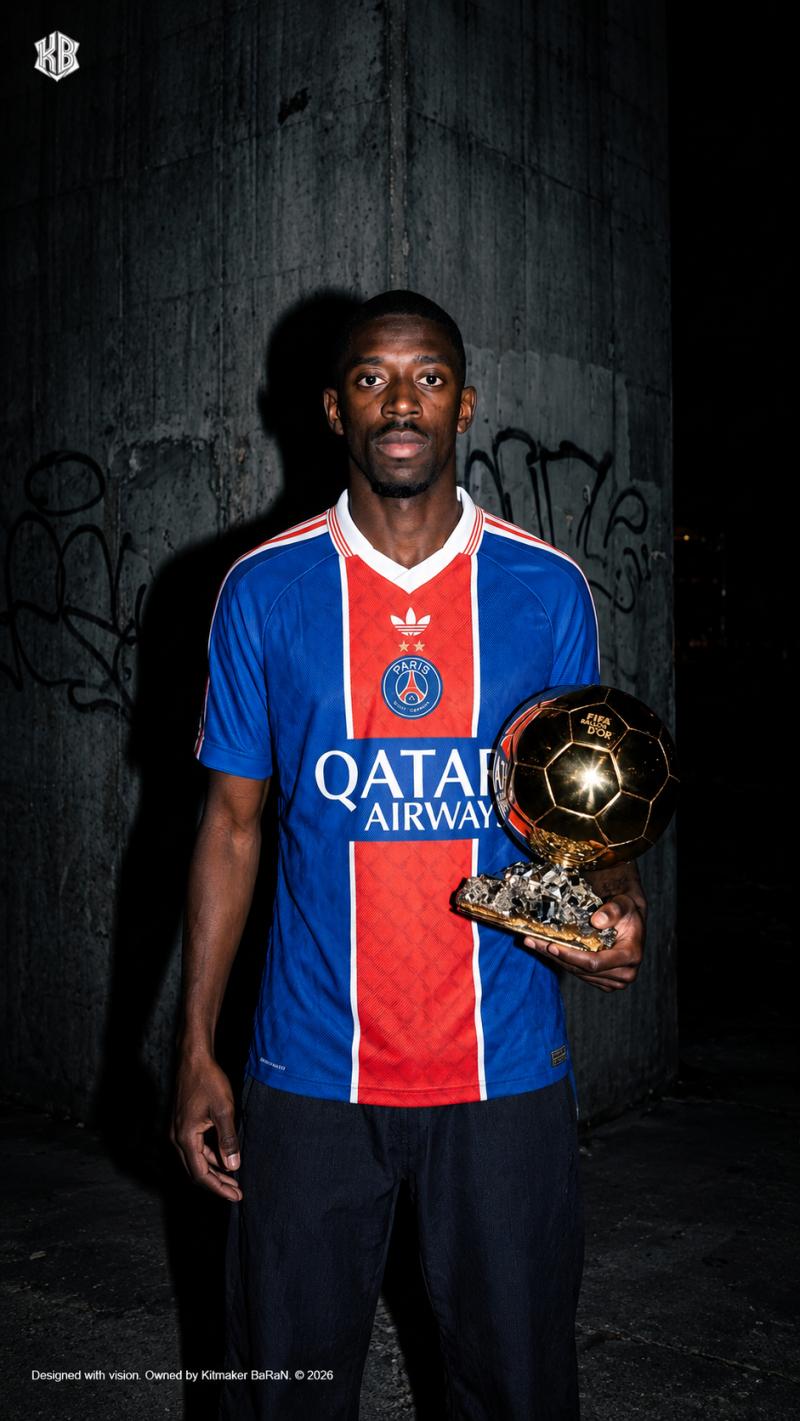
Interview with Kitmaker Baran.
At just 20, Baran — better known as Kitmaker Baran — has become one of the most followed names in football kit design. Based in Istanbul, what started as concept kits for PES and FIFA has grown into a globally recognized visual identity, admired by fans, clubs, and even professional players. For him, a kit is never just a design — it's a way to tell a club's story.
Can you tell us about Kitmaker Baran?
I combined my passion for football and design to create the Kitmaker Baran brand. I initially started by designing kits for PES and FIFA, and over time I developed my own style and began sharing my work on social media. Today, Kitmaker Baran has become a recognized name in football kit design in Türkiye, with my work followed by football fans and teams from different parts of the world.
For me, kit design is more than just a graphic design project. It’s a way of visually expressing a team’s identity, culture, and story.
Is graphic design just a hobby for you, or something more?
Graphic design is not just something I do on social media or a hobby I pursue in my free time. I work professionally in graphic design, with football kit design being the field I have specialized in the most.
While I work on different graphic design projects in my daily work, football kit design is my biggest passion and the area where I want to keep developing myself. I created Kitmaker Baran as a way to turn that passion into a professional identity.
I originally started designing kits for games like PES and FIFA. Over time, it grew into something much bigger than gaming. I began creating designs for real football teams, content creators, and different projects. So today, I don’t see myself only as a graphic designer, but also as a designer who has built his own identity around football kit design.
How did you come up with the concept of showcasing your kits on realistic players and in different settings?
I didn’t actually invent this concept. The idea of showcasing kit designs on realistic players and in different atmospheres already existed, but it wasn’t nearly as popular or developed as it is today.
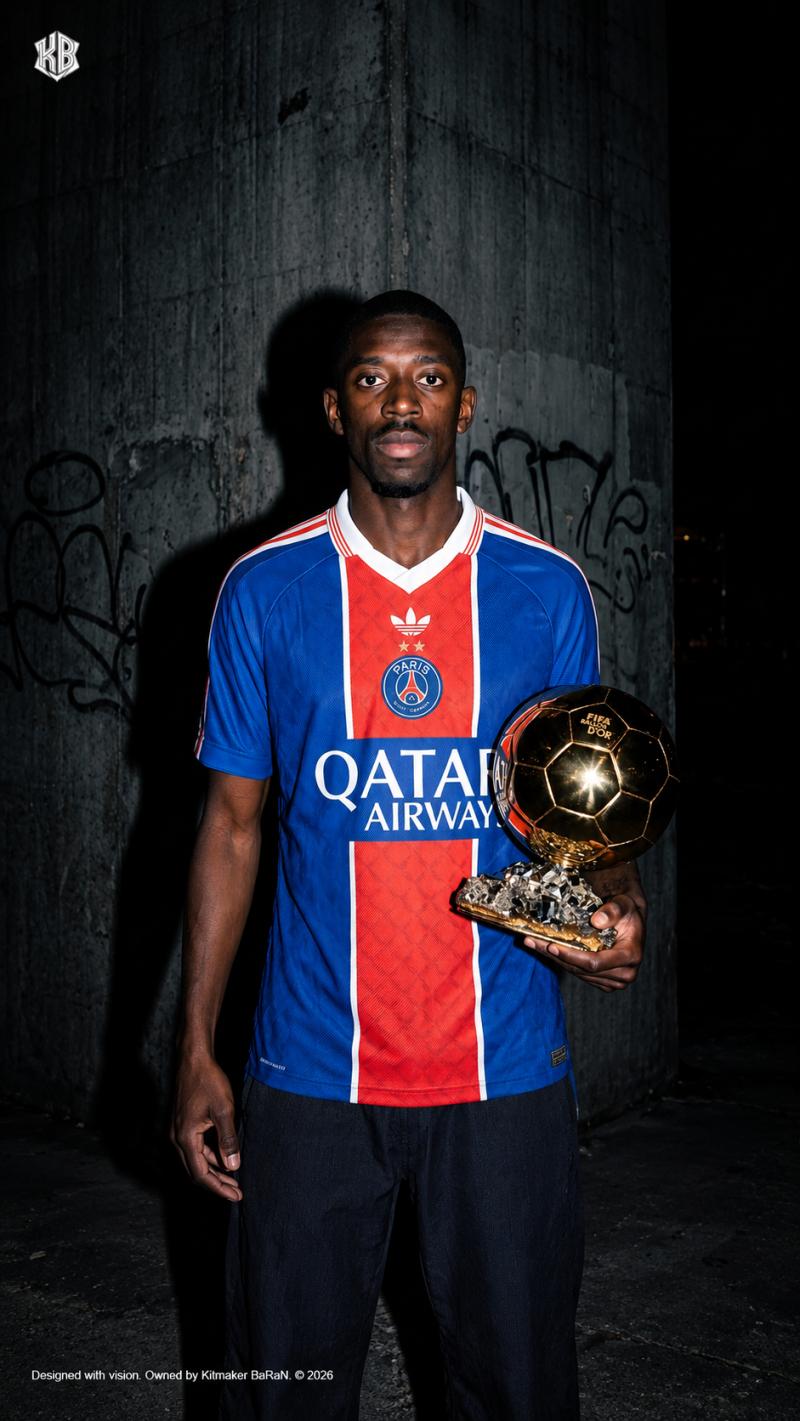
When I discovered this style, I started experimenting with it and adding my own design approach. For me, creating a beautiful kit alone wasn’t enough. I wanted people to feel a story, an atmosphere, and a sense of real football when they saw the design. That’s why I began combining my kits with different environments, lighting, camera angles, and realistic player visuals.
Over time, this approach became one of the most recognizable parts of my work. What started as an experiment eventually developed into a visual style that people began to associate with Kitmaker Baran.
My first projects were mainly concept kits created for the PES and FIFA communities. Even back then, my goal wasn’t simply to design a kit, but to show people what that kit could look like in a real football environment. The work I do today is still built on those early experiments.
Why do you think your work resonates so strongly with people?
I think the biggest reason is that people are interested not only in the kits themselves, but in the way I see and present them. There are so many kits being designed today, and a lot of them eventually start to look alike. I’m not trying to create just another « good-looking kit »; I’m trying to create something people haven’t seen before.
When I design a kit, I want people to think, « I would actually buy this if it were released, » or « I wish my team would wear this. » I think that’s a big part of why my work resonates. Instead of showing people something they already know, I try to show them something they could imagine but haven’t seen yet.
Over time, I’ve honestly realized that people started waiting for my next kit. And I think that’s one of the best things a designer can achieve. It means people are no longer interested only in the design itself — they’re also interested in who created it.
It might sound a little arrogant, but I believe a big part of my success comes from creating my own visual language. Kitmaker Baran is no longer just a design account. It has become an identity, and when people see a new post from me, they are curious to see what I’m going to come up with next.
I want to show people something they could imagine but haven’t seen yet
Can you walk us through your creative process?
My creative process doesn’t really follow one specific formula. Usually, I start with the feeling a certain club gives me. Sometimes I’m inspired by a club’s history, city, or culture, and sometimes the whole idea can come from something as simple as a detail that suddenly comes to my mind.
Before designing, I always look at the club’s previous kits and try to understand its identity. My goal isn’t to simply recreate the past, but to take that identity and reinterpret it through my own perspective. When it comes to templates and patterns, I try not to limit myself too much. Sometimes a very simple geometric idea can work incredibly well, while other projects need something more complex and experimental.
For me, the most important part isn’t only the kit itself, but also how I’m going to present it. Even before the design is finished, I usually start imagining which player would wear it, what kind of environment it would be in, and what atmosphere I want to create. The lighting, location, camera angle, and the player’s pose all become part of the design.
In the final stage, I bring everything together and try to create an image where people can genuinely imagine that the kit is being worn by a real club. I think that’s what makes my creative process different: I’m not just designing a kit, I’m designing the world that kit belongs in.
How do you choose which kit supplier to associate with a design?
When I choose a kit supplier, I don’t simply think about which brand would look good on the design. Sometimes I deliberately want to break the combination people are used to seeing.
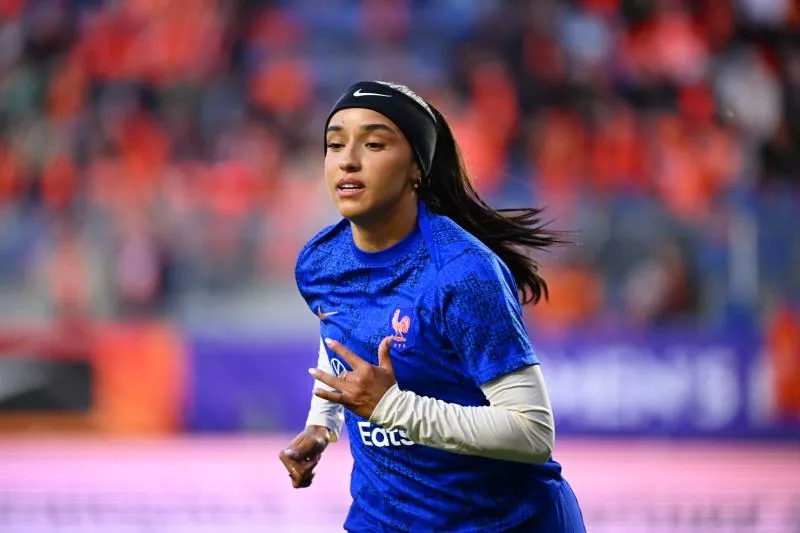
For example, people are so used to seeing France with Nike or PSG with Nike that imagining these teams under a different brand immediately creates something more interesting. It changes an image that has been established in people’s minds for years. Suddenly, the question becomes: « What would France look like in Adidas? »
I don’t make these choices randomly. I first look at the character of the design. Sometimes Adidas’ classic identity and signature details fit the concept better, sometimes Nike’s more modern approach works, and sometimes another brand simply has the aesthetic language the design needs.
To be honest, I also like challenging myself. It’s easy to create what everyone expects. I want people to be surprised when they see a club or national team they know under a completely different brand. If I can break that familiar « this team equals this brand » association and still make the kit feel realistic, then I know I’ve done something right.
At the end of the day, I’m not just designing kits. I’m also trying to change the way people imagine football. I think that’s why some of my most unexpected brand choices end up becoming my most attention-grabbing designs.
Do you take supporters’ opinions into account when designing for a specific club?
Yes, definitely. Especially when I’m designing for a specific club, I think it’s important to understand what the supporters think about the team’s existing kits. I look at what they like, what they criticize, and which elements from previous kits they miss.
However, I don’t simply design whatever the supporters ask for. As a designer, I have my own vision and perspective. Instead of listening to thousands of opinions and ending up with something everyone else is already doing, I prefer to understand those expectations and combine them with my own ideas.
Sometimes I’ll use a detail that supporters really want, and sometimes I’ll deliberately do something they don’t expect. Because I believe good design isn’t only about giving people what they ask for; it’s also about showing them something they didn’t know they wanted.
I even find myself reading comments and asking, « Why do they see it this way? » Understanding the supporter’s perspective is a source of inspiration for me, but I always make the final decision. Because at the end of the day, I’m the one who has to stand behind the design.
Do you use AI in your design process?
To be completely transparent, I mainly use AI for the presentation stage. I use it as a tool to show how a kit I’ve designed could look on a real player and in a realistic environment.
But the kit itself is completely designed by me. The template, colours, details, placement, and overall design language are all mine. Sometimes, when I get stuck during the design process, especially when I’m working on patterns or looking for a certain visual idea, I may use AI to help me explore some possibilities. But that doesn’t mean the final kit is created by AI.
For me, AI is not there to replace the design. It helps me present my ideas better. The creative decisions and the actual kit design are still completely mine.
Have you ever faced legal pressure or takedown requests from brands?
Personally, I haven’t received a direct request from a brand to take down my content or faced legal action so far. However, many of our friends in Türkiye who work in this field have faced similar pressure, and we’ve seen accounts being shut down because of copyright or legal issues.
So for me, this is not just about my own experience. We are part of a community of people who create concept kits and share football kit leaks, and we have always supported each other. Whenever situations like this happen, we try to stand together and support one another.
One of the clearest examples of this was the #FreeJerseyPress movement. It was a collective response from the community against concept kit and football kit leak accounts being restricted or shut down because of copyright or legal pressure.
What matters to me is that we may all have different accounts and different styles, but we are still part of the same community. We know that what happens to one person could happen to another. That’s why I believe it’s important that, when situations like this happen, we always show that we stand together.
Tell us about your role at Kappa Türkiye.
Yes, I currently work full-time at Kappa Türkiye. For me, Kappa is not simply a brand I work for, but also a very important experience that is helping me grow professionally. Being part of the Turkish branch of a global sports brand, experiencing a professional working environment, and being involved in real projects is extremely valuable to me.
I also really appreciate Kappa’s approach to football and sports culture. Being part of such an established and global brand is something I’m proud of, and it represents an important step in my career.
But honestly, working full-time at Kappa Türkiye doesn’t mean I’ve reached my ultimate goal. Quite the opposite. I see it as an important stage on the way to much bigger ambitions. I believe the experience I’m gaining at Kappa will make me a better designer and prepare me for the level I ultimately want to reach.
In the long term, I want to work with much bigger brands and kit manufacturers, bring my design approach to a wider global football audience, and turn Kitmaker Baran into a strong international design identity.
I no longer see myself as simply a designer waiting for a brand to discover me. I’ve built my own name and visual language, and now I want to take it even further.
For me, Kappa Türkiye is not the finish line. It’s one of the important steps toward much bigger goals.
Have any players ever reacted to seeing their image used in your designs?
No, I’ve never had a player complain to me about using their image. Quite the opposite — I’ve had many footballers and well-known personalities like and share my work.
For example, figures from the football world such as Dries Mertens, Cristian Baroni, Marc Pubill, Francesco Totti and Roberto Carlos have liked or shared my work. I’ve also received support from people outside football, including Victoria Gonzalez from the WWE world and artists such as LVBEL C5, UZI EL CHAVO, KAVAK and Gazo from different countries.
I think the most rewarding part is that my work doesn’t stay within the design community. Seeing real footballers, athletes and artists come across my designs and choose to share them on their own platforms shows me that the work connects with people beyond just designers and football fans.
Honestly, when a player or a well-known personality shares a kit I designed on their own account, it means much more to me than just a like. I started by creating these designs behind my computer, and seeing them eventually reach people within the real football world reminds me of how far this journey has come.
Kappa Türkiye is not the finish line. It’s one of the important steps toward much bigger goals
Which of your designs are you most proud of?
If I had to choose just one, it would be difficult, because there are several kits I’m proud of for completely different reasons.
One of the most important ones is my Real Madrid x Nike x Travis Scott concept kit. It’s special to me not only because of the design itself, but also because of the reaction it received. The post reached 811,000 likes, making it one of the most successful pieces of my career in terms of engagement. Honestly, reaching that level showed me that my work wasn’t only resonating with me as a designer, but with a huge audience as well.
Another very special project for me is the Cristiano Ronaldo x Portugal concept kit. Ronaldo has been my idol since childhood and is one of the biggest inspirations behind my journey. So combining the identity of Portugal and one of the players who inspired me most with my own design approach was personally very meaningful.
I would also put my Barcelona x Drake concept kit in that category. With that project, I wanted to go beyond designing a football shirt and connect football culture with music and popular culture. Bringing together a club as iconic as Barcelona with Drake’s aesthetic world gave me a completely different creative space to explore.
I think the common point between these three projects is that I like going beyond what people expect from me. Designing a good-looking kit isn’t enough for me. I want to create something that makes people stop, look again, and wonder, « Who designed this? »
And honestly, when I look at these three designs today, I can say one thing: they are a pretty good representation of why Kitmaker Baran has grown this far.
Which kits are the hardest to reinvent?
I think the hardest kits to reinvent are those belonging to clubs with extremely strong identities and histories. A great example is Galatasaray’s iconic « Parçalı » kit, which has been deeply associated with the club and its supporters for years. With a design like that, you have to be very careful because you’re not simply redesigning a shirt — you’re reinterpreting an identity that people have an emotional connection with.
Clubs like Real Madrid, Barcelona, Manchester United, Liverpool, and Galatasaray all have an enormous heritage. Supporters have very specific expectations, and you can’t move too far away from the club’s iconic colours and recognizable elements.
But honestly, that’s also the part I enjoy the most. Taking an identity that everyone already knows and adding something new to it is much harder than designing with complete creative freedom. I like challenging myself as a designer.
Galatasaray’s Parçalı is a perfect example of that for me. Its identity is so strong that if you change too much, you risk losing the feeling of Galatasaray; but if you change too little, you haven’t really created anything new. For me, the real challenge is finding the balance between those two sides.
Sometimes I might change a club’s kit so much that it feels unfamiliar at first glance, but I still want people to look at it a few seconds later and think, « That is definitely that club. » I think that’s where the real skill lies.
For me, the hardest kits aren’t the ones that limit my creativity. They’re the ones that force me to become even more creative. Anyone can design whatever they want when there are no rules. The real challenge is being able to work within a very established identity, huge expectations, and still make your own signature visible.
Retrouvez chaque jours des vidéos, des photos, des actus et des histoires de maillots légendaires
Nous suivre sur Insta